


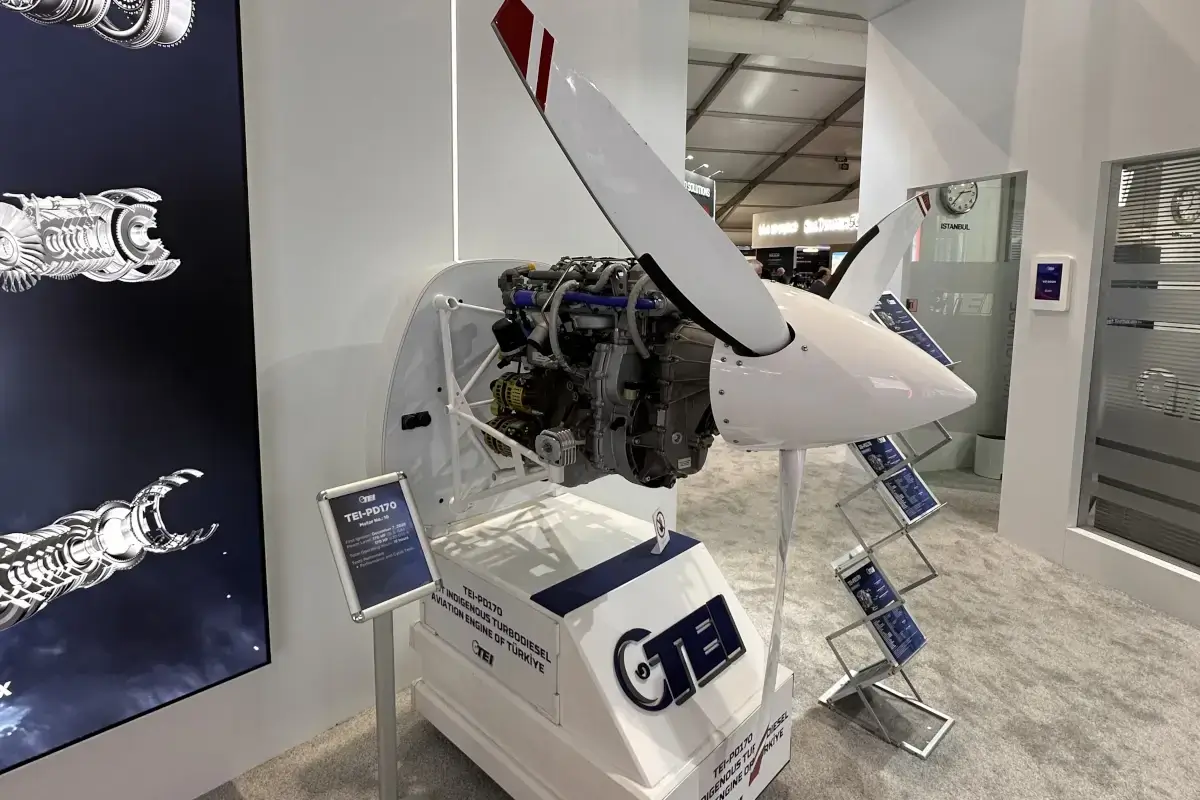
Güney Kore’nin savunma tedarik kurumu, insansız hava aracı programlarında yaşadığı bir dizi başarısız testin ardından Türkiye’den motor tedariki için harekete geçti. defence-blog.com’da yer alan habere göre Güney Kore Savunma Tedarik Programı İdaresi (DAPA), TUSAŞ’a bağlı TEI tarafından üretilen PD170 turbodizel motorunu satın alma olasılığını gündeme getirdi. Haberde, TUSAŞ’a yakın kaynakların şirketin Güney Kore ile potansiyel iş birliğine geniş bir perspektiften baktığını ve ortak mühendislik projelerinin uzun vadeli endüstriyel ortaklıkların temelini oluşturabileceğini belirttiği aktarılıyor.
PD170: The Engine That Stayed Airborne for 35 Hours
The report notes that the engine, which powers TUSAŞ's ANKA and AKSUNGUR UAVs, is also used on Baykar's Bayraktar TB3 platform. According to TUSAŞ data, an AKSUNGUR equipped with the PD170 stayed airborne for 35 hours and reached an altitude of 30,000 feet (9,144 metres). The report states that TEI drew on experience gained from the engines of US-designed F-16 fighter aircraft produced under licence in Türkiye when designing the engine.
Successive Failures in South Korea's UAV Tests
The engine request came following two major failures in South Korea's UAV programmes. On 16 September, at the Ministry of National Defence's 2026 defence UAV technology exhibition, a jet-powered UAV developed by Korea Aerospace Industries crashed to the ground shortly after take-off. On 25 August, the South Korean Navy and the Defense Development Agency attempted to launch medium-sized kamikaze UAVs from the 14,500-tonne amphibious assault ship ROKS Marado in waters south of Busan. Both UAVs fell into the sea after flying for only a few seconds, and the planned attack on the unmanned surface vessel could not be carried out.
Ukraine Partnership Abandoned
Haberde dikkat çekilen bir diğer nokta, Güney Kore’nin Ukrayna ile İHA motorları alanında yürüttüğü çeşitli ortaklık programlarından tamamen vazgeçmiş görünmesi. Bu programlar arasında jet motorlu varyantlar da bulunuyordu. Türk motoruna yönelme, Güney Kore’nin bu alandaki tedarik stratejisini yeniden şekillendirdiğine işaret ediyor.
A New Threshold in Türkiye's Engine Exports
Türkiye's defence industry exports have to date been associated predominantly with platform sales. The export of Bayraktar TB2s, AKINCIs and ANKAs is, of course, a critical success. However, exporting the engine – one of the most challenging components that make up a UAV – points to a very different level.
Türkiye was dependent on foreign sources for UAV engines for many years. The first versions of the Bayraktar TB2 flew with Austrian Rotax engines. AKINCI engines were procured from Ukraine. TEI's development of the PD170 was one of the most tangible steps towards breaking this dependency. Now, this engine is being sought by a country that has itself made serious progress in its defence industry, such as South Korea.
Behind this request lies not only a commercial preference, but also the factor of battlefield-proven reliability. The PD170 has flown in real operational conditions with the ANKA and AKSUNGUR, demonstrating its performance with a 35-hour endurance. It is entirely understandable that a country struggling with test processes, such as South Korea, would turn to a proven solution.
Scope of Negotiations Unclear
Şu aşamada taraflar, motorların hangi Kore İHA programını güçlendireceğini, Seul’ün kaç adet talep ettiğini veya olası bir anlaşmanın değerini açıklamış değil. Savunma Sanayii Başkanlığı’ndan bir yetkili, belirli motor modelleri hakkında yorum yapamayacağını ve ancak gerekli prosedürler ile müzakereler tamamlandıktan sonra açıklama yapılacağını belirtti. defence-blog.com, motor talebini Güney Kore’nin İHA teknolojisinde geride kaldığına dair değerlendirmelerle ilişkilendiriyor, ancak ne Seul ne de Ankara bu değerlendirmeyi doğrudan dile getirmiş durumda değil.
Note
If you have any photos or video footage to support our news story, please share them with us using the information provided on our contact us page.
